
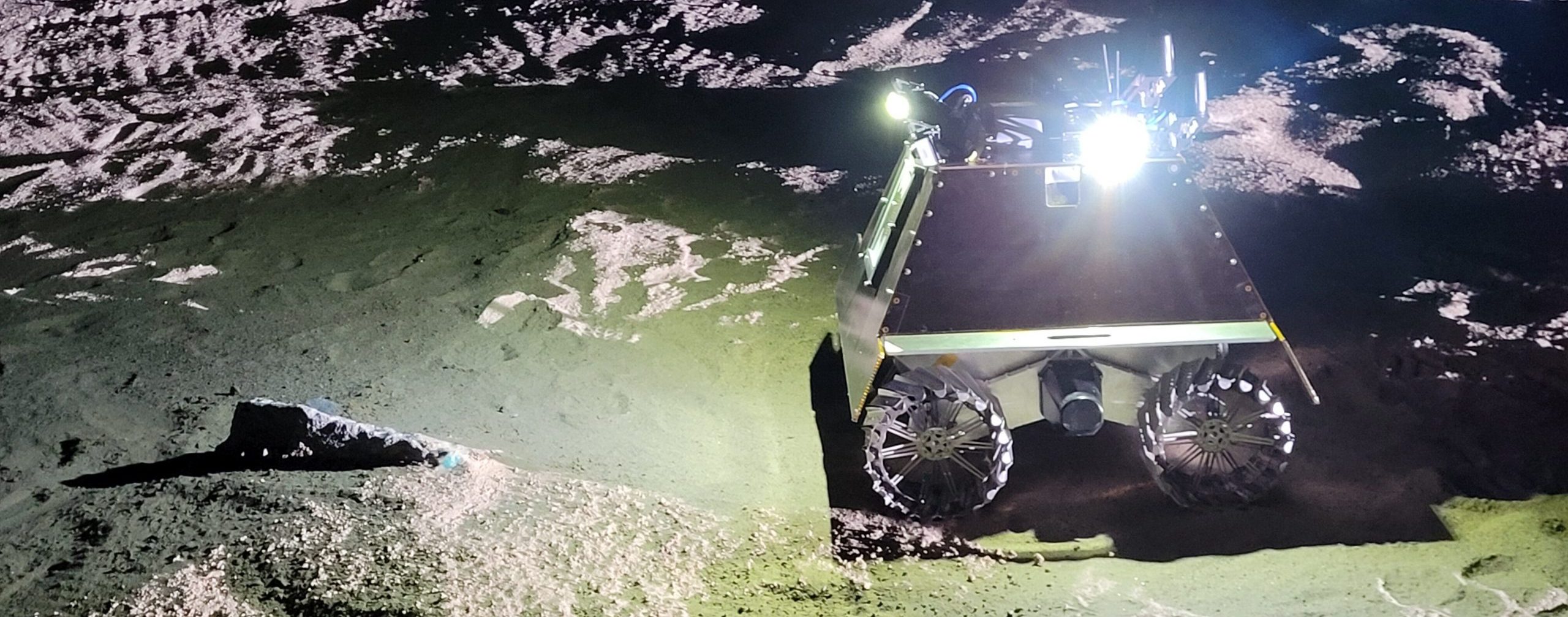
As part of the Government of Canada’s Comprehensive Expenditure Review, the Canadian Space Agency (CSA) is terminating work on the Lunar Rover Mission (LRM), as shown in their 2026-27 Departmental Plan. This mission was intended to put Canada’s first rover on the Moon before the end of this decade. We would like to thank our excellent LRM team of over 30 Canadian companies, universities, and supplier partner organizations, as well as our very talented internal engineers, scientists, technicians, and program managers, for their dedication to the LRM program and the great progress made to date on this ground-breaking mission. We would also like to thank the CSA for their leadership and support these past five years on the LRM program, and their on-going dedication to guide Canada’s path in space both nationally and internationally.
We are understandably disappointed by the Canadian government’s decision to terminate this program, especially in light of the significant co-investment that Canadensys and NASA were making in this Canadian mission. As an innovative space exploration company, Canadensys remains committed to providing lunar surface infrastructure, including lunar rovers, to enable humanity’s activities on the Moon and beyond. In addition to our commercial lunar activities, we will continue to support our national program in lunar rover activities through the multi-tonne Lunar Utility Vehicle program , which is scheduled to operate on the Moon in the mid 2030’s, and towards which Canadensys has been working for over four years on various CSA contracts, including the current Phase 0 and TD1 contract.
Should the Government wish to resume Canada’s bold undertaking to quickly put an innovative smaller rover on the Moon, we stand ready to serve. In the meantime, Canadensys is in discussions with our international commercial partners in the US and Europe to take advantage of the LRM developments of the past five years in support of American and European lunar rover programs.
Lunar exploration is becoming increasingly important internationally, with broad social, economic and defense implications. It is also an endeavor where technical and programmatic achievements often need to be traded against funding possibilities and constraints. We remain committed to humanity’s exploration and development of the Moon, and ensuring Canada has a key role to play, and are appreciative of the important work the Canadian Space Agency is doing to guide the national program.